

Creating an anthology often starts with a simple question. What would it take to bring a group of writers together and turn that shared energy into a book? Anthologies offer a way to build something larger than a single voice while sharing both the work and the reward.
In indie publishing, anthologies have become a common path for collaboration and visibility. They allow multiple authors to share the work of building a book while reaching new audiences through each contributor’s network. They create space for experimentation, giving writers a way to explore ideas without committing to a full-length project.
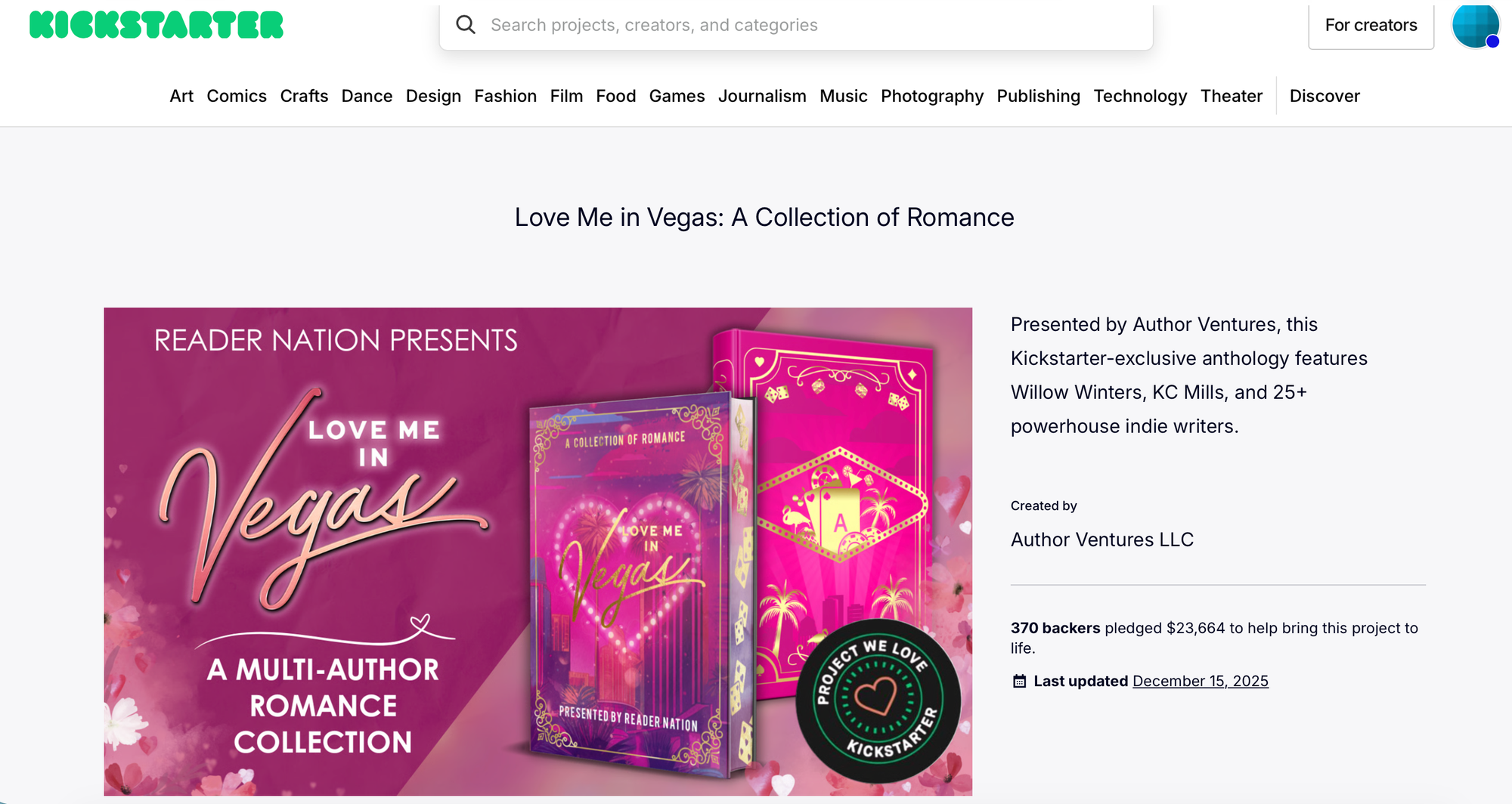
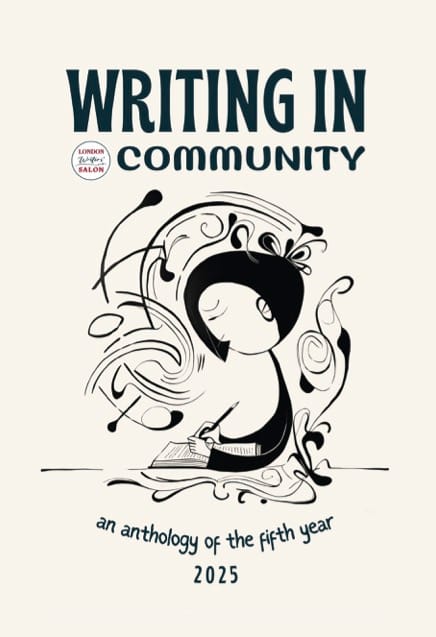
These collections are not all built the same way. Some grow from genre communities, like editor J. Curtis’s The Midnight Vault. Others are shaped by crowdfunding efforts, such as Love Me in Vegas, coordinated by Isabella Lisak. Still others emerge from writing groups like the London Writers’ Salon, represented by Editor-in-Chief Gina Beach.
Supporting them all, however, are platforms that provide the structure behind these efforts and help turn collaborative ideas into published work. In these three examples, Lulu worked with the author groups to guide the projects from manuscript to finished book, says Sarah Franklin, public relations manager for the company. These examples highlight both the opportunities for success and the shared challenges that come with indie anthologies, offering practical insight into how authors can organize, produce, and bring their own collaborative projects to life.
A Horror Anthology Built on Shared Fear
Horror is a natural fit for an anthology. It thrives in short story form, where a single idea can sit with the reader long after the story ends. It also benefits from multiple voices, since fear shifts depending on who is telling the story. One writer leans into atmosphere. Another into shock. A third into quiet dread. When those approaches sit side by side, the result feels layered rather than repetitive.
That range shaped The Midnight Vault, a Horror anthology coordinated by author J. Curtis. The project began with a simple moment of curiosity within a writing community on Substack. As Curtis explains, “What intrigued me was how many people chimed in, of all ages, saying they had heard of The Twilight Zone and had a favorite episode.” That shared reference point gave the group a common language from which to build, even before the anthology existed.
What followed was less a formal launch and more of a collaborative leap. Curtis describes how quickly the idea turned into action. “We organized a list of a few people—thirty-one, I think—and asked if they would be interested,” he says. “They were from across the gamut: Horror writers, Sci-Fi writers, Speculative Fiction of all types, including some visual artists. We said, ‘Would you be interested in doing something? We’re going to do it ad hoc, and we’re going to post everybody’s story.’”
That openness shaped the tone of the anthology series from the beginning. Instead of narrowing the field to a specific type of Horror, the project invited a wide range of interpretations. As Curtis notes, “We loved the varied styles because we didn’t choose just Horror writers. We chose writers of all stripes.”
What held it together was not strict genre control but instead a shared investment not just in authors’ own stories but also in the complete collection. That sense of ownership helped carry the project through drafting, revision, and eventual publication.
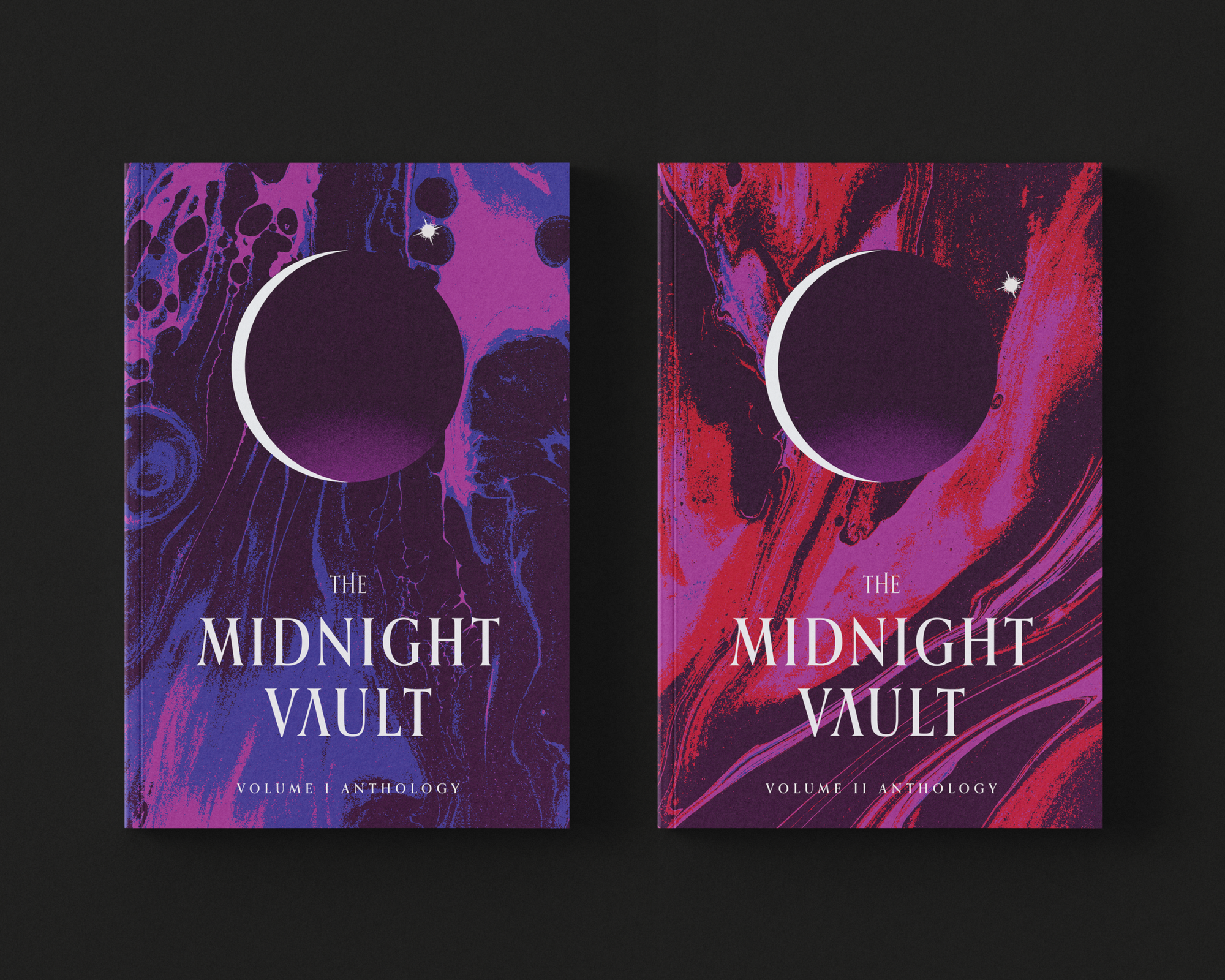
As the anthology grew, so did the editorial demands. The next volume had the same theme, but because of the popularity of the first book, a more selective approach was needed to find the content. Organizers received ninety-eight submissions, Curtis says; from those, they selected only the nineteen most memorable for the anthology. That shift reflects a common turning point in anthology work, where a project moves from open collaboration into curated publication.
From a publishing perspective, projects like The Midnight Vault reveal a practical advantage. “One of the benefits is going to be that the immediate network is much larger with more authors involved in the process,” Franklin explains. Each contributor brings their own audience, creating a built-in system for visibility and promotion.
What stood out most about The Midnight Vault was not its reach, however, but its origin. “The community component of it added some extra flair of author-to-author support and friendliness that you might not find in traditional anthology publishing journeys,” Franklin continues. “This is something the publisher can lean into for book announcements, spreading positive reviews, and even having a bank of different personalities to tap into for any publicity opportunities that come about.”
The Kickstarter Anthology that Became a Campaign Story
Some anthologies develop quietly, with organizers creating the project behind closed doors and only revealing the polished collection once it’s ready for publication. Others take shape in public, where every step of the process is visible to readers, backers, and the authors themselves. Love Me in Vegas falls into the second category. Built by the Author Nation Cohort and coordinated by Isabella Lisak in 2025, the anthology was designed not only as a collection of stories but as a shared experience that unfolded in real time.
IAM’s Jamie Davis shared more about the lessons he learned from the cohort in an October 2025 feature. Read it at the link below.
 Jamie Davis
From the beginning, the project served the dual purpose of being both creative and educational. Many of the participating authors were new to Kickstarter or to anthology work. The anthology was a way to learn by doing, with guidance from Lisak built into the process, to culminate with the Reader Nation event in Vegas during 2025. As she explains, “It felt like a natural capstone to the cohort experience.”
What stood out most in the Love Me in Vegas project was how much of the work happened before the campaign ever launched. Lisak describes this early stage. “There are a couple of months beforehand where you have to plan out who is participating in the anthology,” she says. “Who is designing the cover? Who is going to print the books? How long it takes and how much it costs. There are a lot of people involved—editors, designers—and there are many moving pieces.” These tasks are part of the normal process of an anthology, but they become more complex as the number of authors involved grows.
The level of coordination required for crowdfunded anthologies can turn the projects into something closer to a production schedule than a simple book project. Every decision connects to another. Every delay has ripple effects. It also means that when the campaign goes live, the team is already carrying months of preparation behind the scenes.
The pace shifts during the campaign itself. The focus of the organizers moves to visibility and communication. Backers ask questions. Even after the crowdfunding portion is done, organizers are required to keep not only their authors but also their backers informed of their progress. As Lisak notes, “The campaign itself may only run for a month, but everything before and after takes about half a year.” That longer timeline is easy to underestimate at the start.
Fulfillment is often the most demanding phase of any crowdfunded project. It takes time, coordination, and physical labor. In the case of Love Me in Vegas, it also became one of the most meaningful parts of the experience. Fulfillment to Kickstarter backers often is done by mail, but because of the conference, the project could allow backers to pick up their books in person and to volunteer to help pack and ship books to backers everywhere. “It was very touching how many people showed up to help,” Lisak says. “Authors, spouses, and attendees all pitched in. We set up an assembly line, and it moved much faster.” That image of authors packing their own books, side by side at a writer’s conference, reinforces the idea that the anthology is a shared effort from start to finish.
From a publishing standpoint, projects like Love Me in Vegas highlight the expanded reach of anthology work. As Franklin explains, “The publisher can lean into its community when it comes to book announcements, spreading positive reviews, and even having a bank of different personalities to tap into for any publicity opportunities.” Each contributor becomes part of the promotional network, extending the life of the book beyond the campaign. Instead of only the publishing company carrying the promotional load, all the participants in the anthology could lend their support too, expanding the success of the project.
That reach also connects to long-term planning for aspects such as the project’s distribution and how revenue will be shared, Franklin notes. Decisions made early in the process shape how the book continues to perform after the campaign ends. Love Me in Vegas was a successful anthology that helped to build community. Another volume is planned for the future.
A Writing Community Anthology that Built Itself
Some anthologies are built around a clear theme or market focus, but others take shape from an existing circle of trusted collaborators. The London Writers’ Salon anthology, Writing in Community, emerged from the latter approach. It was not planned as a publishing project at the start. It was built out of a need to connect during a time when many writers felt isolated.
During the COVID pandemic in 2020, the Salon became more than a writing group. It became a daily habit for many of its members—a place where writers showed up, set intentions, and worked side by side in quiet focus. The idea of creating an anthology of members’ work came from that shared experience. As the editor-in-chief of the London Writers’ Salon’s anthology, Gina Beach, explains, “We wanted to do a community project that celebrated the work that came out of this difficult period in 2020.” The anthology became a place for their community members to celebrate their work and form connections.
Unlike Love Me in Vegas, which was coordinated by organizers, the community itself drove the London Writers’ Salon’s project. “At that point, we didn’t have our submission portal,” Beach says. “We didn’t have much of a framework at all. We just asked people to email us … and it just really grew organically.” Later, the community adopted Typeform, a web-based program where a submission’s information can be transferred to a Google Sheet to ease submission coordination.
That lack of structure might seem risky from a publishing standpoint, but it also created a sense of openness that shaped the identity of the book. Instead of building strict barriers to entry, the project leaned into trust. That trust continues to guide the fifth anthology today. “Anybody who considers themselves part of the London Writers’ Salon community in any capacity is warmly welcome to submit,” Beach says. The Writing in Community anthology is available both in print and online, reflecting the Salon’s identity as a global, digital-first writing community that still values traditional book publication.
For many contributors, the anthology becomes a first publication, a confidence boost, or a way to mark progress in their writing life. Beach emphasizes how intentional the team is about that experience, especially during the editing phase. “We try to do it in a very gentle and encouraging way, where we’re not going to just ghost someone,” she says. “We’re very back and forth … saying, ‘You didn’t quite meet the brief. … Can you try again?’”
The emotional impact of the finished book reflects that approach as well. “There is such gratitude and this overwhelming sense of collective ownership over the project,” Beach says. The anthology does not belong to a single editor or publisher. It belongs to everyone who helped shape it.
From a publishing perspective, projects like this are more common than they might seem. As Franklin notes, “In our twenty-three-year history we have over twelve thousand anthologies published on Lulu.” Many of those projects begin in communities just like the London Writers’ Salon.
The challenges are real, she acknowledges. Managing submissions, edits, and communication across a large group can become overwhelming. As Franklin puts it, “If you’re working on one book and you’ve got the back and forth in your email inbox for one author, that times thirty is a lot of work.”
For Beach, however, the effort is worth it. “I volunteered to do this and continue to volunteer because I get so much out of supporting writers and seeing them come back and say, ‘Because of this, I did this,’” she says.
What Anthologies Mean in Indie Publishing
When you look at these three projects—a Horror anthology built from a Substack community, a Kickstarter Romance anthology tied to a live event, and a global writing group using a book to mark its shared experience—the differences are easy to see. Each one follows a different path, shaped by its purpose and the people behind it.
From Franklin’s perspective, however, every anthology is a complex publishing project that brings together many of the same moving parts as a traditional book, just on a larger scale. “For the first anthology, it’s probably a combination of all of the moving parts that a book would typically experience, but amplified,” she says. Communication becomes more demanding. Timelines become more difficult to manage. Expectations have to be set from the beginning for the participants and the publisher so everyone understands the stakes of the project.
Complexity also creates opportunities unique to anthologies. Each contributor to an anthology brings their own readers, their own networks, and their own platforms for sharing the work. For The Midnight Vault, the Substack community helped build early interest and engagement in the anthology. With Love Me in Vegas, the authors themselves became part of the campaign’s visibility and momentum as part of the crowdfunding campaign. In the London Writers’ Salon anthology, the existing community provided both contributors and readers from the start.
“There is such gratitude and this overwhelming sense of collective ownership over the project.”
—Gina Beach, London Writers’ Salon editor-in-chief
Authors interested in organizing or participating in their own anthologies should keep in mind the financial aspects of such projects. Beyond funding the initial project, managing royalties and payments for contributors, if part of the process, can be complicated without a solid system in place. Explore whether your publishing platform supports multiple contributors within a project and whether it can handle revenue splits automatically. In Lulu’s case, Franklin says, “We can allow for the publisher to include multiple pays for projects. … If you’re splitting revenue thirty ways, it keeps it clean within our technology.” Other platforms, such as Draft2Digital, have similar features.
On the other hand, authors should consider the flexibility of a project post-publication. Indie anthologies are not fixed in the way traditional publications often are. They can evolve over time, even after release. “One of the beautiful things about self-publishing is the publisher can always go in and change anything,” Franklin says. That means updates, corrections, and even strategic shifts can happen without restarting the entire process. That flexibility still needs a plan, however. How you share the book, set the price, and sell it all affect how well it does. “Understanding the distribution options and how the revenue is broken down is very important,” she says. Choices you make early can change how many people see it and how well it lasts over time. Before you join an anthology, take time to learn how it will be sold and how you will be paid.
What becomes clear across all three case studies is that anthologies operate on two levels at once. They are creative collaborations, built on shared ideas and voices. Although every project takes shape differently, each one begins with an idea, grows through collaboration, and reaches readers through a mix of creative effort and practical structure.
Anthologies are not just collections of stories. They are a record of collaboration between writers, readers, and the larger publishing world. Each voice stands on its own, but together they create something larger—a shared space where writers and readers meet from many directions and celebrate the art of storytelling.


