


Audiobooks are no longer a niche format or a side experiment. According to Edison Research, the number of Americans who listen to audiobooks has increased by 167 percent over the past ten years. Libro.fm predicts that by 2030, audiobook sales will account for 21 percent of the global publishing sales revenue. Interest continues to rise across all demographics, with the most dramatic growth coming from younger listeners, particularly Gen Z. Whether you believe audiobooks “count” as reading, their place in the publishing ecosystem is now firmly established.
For indie authors, that growth presents both an opportunity and a dilemma. Today’s authors can hire professional narrators, record their own audiobooks, or turn to digital narration tools—options that barely existed a few years ago. The rapid advancement of AI has reshaped how accessible audiobook production can be while also introducing new ethical and creative considerations. According to the Audio Publishers Association, 77 percent of readers were willing to try AI-narrated audiobooks in 2023; although that number dipped to 70 percent in 2024, the overall number of AI-narrated titles and listens has continued to grow.
The takeaway for authors is clear: Audiobooks are no longer an experimental add-on. More than half of Americans—an estimated 134 million people—have already listened to an audiobook, according to Edison Research. The real question facing indie authors today isn’t whether to enter the audiobook market but how to do it in a way that aligns with their goals, values, and resources.
Three Paths to Audiobook Publishing
Authors preparing to step into the audiobook market have more options than ever in the development process. The industry standard for audiobook production today is still to hire a professional narrator to bring a book to life. But indie authors have always tended toward do-it-yourself methods, whether out of necessity or a preference for creative control. So it should come as no surprise that many indie authors choose to develop their speaking voice and narrate their own books or embrace emerging technology to create digitally narrated audiobooks, especially as these methods become more accessible and affordable to indie authors with smaller audiences and production budgets.
Professional Audiobook Narration
The least controversial and potentially most expensive route to publishing an audiobook is hiring a professional narrator. Companies such as Authors Republic, ACX, and INAudio—formerly Findaway Voices—serve as marketplaces to connect narrators and authors. Boutique publishing companies, such as Pink Flamingo Productions, also provide audiobook production and marketing services while emphasizing the author/producer relationship. In most cases, authors choose between per-finished-hour and royalty-split, usually 50 percent, or hybrid payment plans. Authors simply deliver their manuscript and let the pros bring their stories to life. But not all authors will see a return on their investment, and hiring a narrator with SAG-AFTRA credits may be out of reach for authors with smaller platforms.
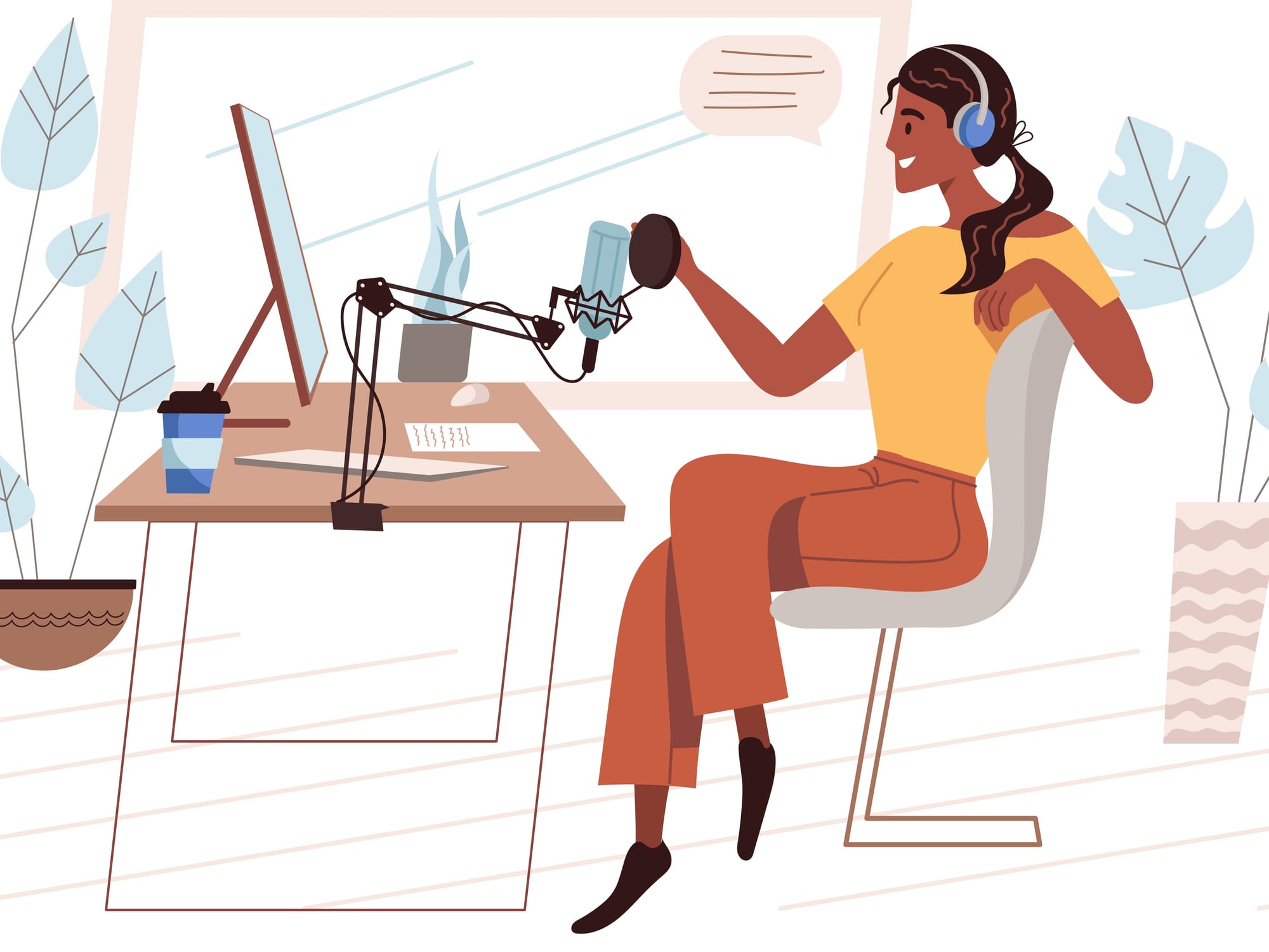
Depending on the narrator’s experience, the cost per finished hour is often between $200 and $300, making a 100,000-word manuscript fall between $1,500 and $3,000. Narrators who produce audiobooks with higher production quality may cost significantly more, with top-tier narrators charging up to $1,000 per finished hour. The growing popularity of dual and full-cast narration can also add to the cost.
When considering professional narration, the most pressing question for most authors is whether the investment makes sense for their book. Professionally produced audiobooks tend to perform best in genres where listeners expect a polished, immersive experience or where narration quality directly affects credibility. Genres like Dramatic Fiction, Sci-Fi, Fantasy, and Romance benefit from the nuance of a human performance, as do Biographies and Memoirs—though memoirists may want to consider self-narration to build a more personal connection with their readers.
Authors should also consider the timing of an audiobook’s release and their backlist when deciding whether to hire professional narrators, as those with an established audience are more likely to recoup the expenses of professional narration.
Digital Audiobook Narration
For authors whose books—or budgets—aren’t well suited to professional narration, digital audiobook production offers a lower-risk alternative with fewer upfront costs and a much faster path to market. Digital audiobook narration, like human narration, exists on a broad scale in terms of both quality and pricing. Google Play and Amazon KDP both offer free AI narration. Authors who use Google Play to create their audiobooks keep 52 percent of their royalties, and those who use Amazon’s Virtual Voice program, still in beta at the time of this article’s publication, retain a 40 percent royalty share. In both cases, users upload their manuscript; choose a narrative voice from a selection of genders, ages, and accents; and let the software speak.
Pro Tip: Authors who choose this option should listen to the results carefully, as some AI voice struggles with the pronunciation of certain words—particularly exclamations or onomatopoeia. It may also read years as numbers or create unusual pacing, depending on the punctuation. In most cases, you can get around these problems by changing the spelling in the transcript or creating special rules for the AI to follow.
Spoken Press uses the AI voice-generating and voice-cloning software developed by ElevenLabs to produce digitally narrated audiobooks. According to the company’s Ethical AI Statement, Spoken Press “utilizes ElevenLabs and Hume.ai for their industry-leading commitment to ‘Consent-Based’ synthetic speech.” This allows them to produce realistic multi-character narration that authors can tune and revise within the platform. You can even clone your own voice and use it to narrate your book. Spoken Press allows you to create and edit your audiobook on their platform for $20 per five thousand finished words on a per-project basis, or $10 per five thousand finished words with a $50 per-month subscription. The price is fixed and paid when the project is complete.
Authors can also use ElevenLabs separately to clone their own voice if they feel comfortable editing their audio off the platform. This might be a good compromise for authors who are interested in learning to do their own narration but feel self-conscious about their performance or don’t have the equipment and studio space to record themselves. Monthly billing with a commercial license starts at $5, but ElevenLabs has levels for creatives and businesses that range up to $1,320 per month.
Nonfiction, Self-Help, and Technical writing may also be a better fit for this form of AI-generated narration, as informational content tends to be narrated at a more neutral, steady pace.
DIY Audiobook Recording: Things to Consider
Authors who choose self-narration will find a wide variety of supports available online, from basic how-to articles, like Draft2Digital’s “How to Record Your Own Audiobooks in 5 Steps,” to detailed studio walk-throughs and performance tips on YouTube. Mary Catherine Jones, the owner and executive producer at The Audiobook Experience at Voice Over Vermont, has provided two webinars on recording your own audiobooks for IndieAuthorTraining.com. At Author Nation last November, author and voice actress Cindy Gunderson presented “Narrating and Producing Your Own Audiobooks.” During her talk, she discussed preparation, equipment, mindset, studio setup, editing, and publishing.
“There has never been a better time to be an imperfect narrator.”
—Cindy Gunderson, author and voice actress
For most authors, the barrier to self-narration is more about mindset than money. The basic requirements for recording—a microphone, studio space, and editing software—can all be sourced for less than most authors typically pay for book covers. Narrators just starting out are encouraged to first invest in a high-quality microphone, since better input will result in less time and effort spent on editing later. But a carpeted closet full of clothes to dampen the sound has sufficed as a studio for many beginners, and open-source editing software like Audacity is often available for free.
How to Get Started Recording Your Own Audiobooks
Choosing to record your own audiobooks may have a smaller barrier to entry than some realize, with free audio editing programs and creative strategies allowing authors to produce quality recordings without professional equipment. Here are a few strategies to try and lessons to keep in mind if you’re considering the do-it-yourself route.
Mindset and Expectations
In preparation to record, authors should start by managing expectations—for both themselves and their readers. Unless you have prior experience in performance, your initial attempts are unlikely to provide the nuanced characterization and consistent flow of seasoned professional narrators. And that’s okay. “There has never been a better time to be an imperfect narrator,” Gunderson writes in an email interview. “With the influx of AI narration, people are beyond grateful for human-read audiobooks. They're forgiving of your learning curve, so be honest about your journey. Our failures and mistakes help us connect with readers and build them into super fans.”
That learning curve often discourages new author-narrators, who hope to master the format quickly. But like any new skill, choosing the DIY route may take significantly more time than expected until you develop it. In Draft2Digital’s “How to Record Your Own Audiobooks in 5 Steps,” author Sarah Kuiken suggests this calculation to predict the time you will need: “Divide the total word count by 9,000 (the average number of words narrated per hour) and then multiply that number by three.” Most recommendations suggest budgeting around three work hours for every finished hour of recorded audio. With practice, that time should decrease, as you make fewer mistakes and learn what works for you in the recording studio and the editing suite.
Gunderson cautions that some authors get too hung up on their mistakes and struggle to release their first audiobook. She encourages them not to hesitate. “It will be bad compared to what you're able to accomplish later, so just accept and embrace that fact now,” she writes. “The faster you do, the faster you'll get to the really excellent work you're about to do!”
Manuscript Prep
To give yourself a head start and decrease the post-performance checklist, start by preparing your manuscript. During Gunderson’s presentation, she shared that narrating her own books has improved her writing. Reading her words aloud showed her where she could improve her craft, from characterization and dialogue to better story structure and pacing. When you prepare your manuscript for narration, you may take note of things you want to change for next time, but you can also choose to make some changes explicitly for that audiobook, whether you choose to update your ebooks and paperbacks or not. For example, you could drop a few dialogue tags if the action and rhythm of the dialogue—or your own voicing—makes it clear which character is speaking. Or you might move a character’s description and read it before that character’s dialogue, if doing so helps a listener visualize the speaker. Gunderson also recommends updating your book bible during this step to remind yourself of how you voiced the characters in case you need to return to them later.
Once your manuscript is ready to record and you’ve practiced your characters’ voices out loud until they sound natural, or until you stop judging yourself, choose a quiet space to record. You’ll want to consider background noises that you usually tune out, like passing cars and humming appliances, and remove anything that might create electrical interference. Smaller spaces are easier to soundproof, whether you hang blankets around you or choose a more permanent sound treatment. This is why carpeted closets remain a common choice for in-home sound booths. From there, authors have plenty of options to scale up, from building their own outbuildings to renting space in a professional recording studio.
Recording and Editing
The recording software you choose can streamline the editing process, but selection mostly comes down to your comfort and style. The following softwares have low to no cost at the entry level and allow you to create the file types needed to edit and upload your audiobook once finished.
- GarageBand (Mac)
Cost: Free
Often the easiest entry point for Mac users, the pre-installed software offers enough features to produce high-quality results for beginner and intermediate narrators. - Logic Pro (Mac)
Cost: $12.99 per month
Part of the Apple Creator Studio, Logic Pro provides a broader and more advanced set of tools suited to experienced editors or authors who want greater control over their audio. - Audacity (Mac and PC)
Cost: Free
A free, user-friendly option with basic editing tools, Audacity is widely used by beginners and remains a reliable choice for straightforward audiobook production. - Source-Connect
Cost: $35 per month to $105 per month
Source-Connect is a professional-grade platform commonly used in the voice acting and audiobook industry and is likely best suited for authors collaborating with editors or studios. - Riverside
Cost: $24 per month to $79 per month
This is a cloud-based, subscription recording platform that simplifies remote recording and file management, particularly for authors working outside a traditional studio setup. - Zoom and similar video-conferencing tools
Cost: Varies
Basic recording options on video-conferencing or voice-recording apps may be sufficient for rough drafts or practice sessions but typically require additional processing to meet audiobook distribution standards.
Pro Tip: Editing your audiobook can be challenging, especially if you intend to meet the standards of distributors like Audible, so understand the requirements of your chosen platform before taking the next step. Realistically, though, anything you create to Audible’s requirements should be accepted elsewhere.
Distribution
The most common audiobook distributors are ACX, Voices by INAudio—formerly Findaway Voices—and Spotify, but many authors also release their audiobooks through YouTube and BookFunnel. Posting your audiobook on YouTube allows you to use the popular streamer as a magnet, giving readers a space to interact in the comments and the opportunity to listen to your book before they consider purchasing print copies. BookFunnel integrates with many ecommerce platforms, like Shopify, to allow authors to sell audiobooks directly to readers.
Audiobook creation isn’t just about adding another format to your catalog—it’s an extension of your author brand. The choices you make about narration, technology, and distribution all signal something to your readers about what you value, how you work, and the kind of experience you want to offer. For some authors, that means investing in professional narration; for others, it means embracing digital tools or lending their own voice to the story. There is no single “right” path, only the one that best aligns with your goals, resources, and relationship with your audience. The most successful audiobooks aren’t defined by the method used to create them but instead by the confidence behind the choice. The right audiobook is the one you can stand behind—creatively, ethically, and sustainably—and the one that allows you to meet listeners where they are without losing sight of who you are as an author.


