


When Michael LaBorn discusses publishing, he doesn’t mention profit margins or bestseller lists. Instead, he talks about the stories that aren’t being heard, the writers fighting for a seat at the table, and the visionaries who are constructing new ones. As founder of Left Unread Books, an imprint of Bindery Books, LaBorn has made it his mission to champion Black and brown authors and redefine what inclusivity looks like in the book world.
“We’re a publishing imprint that’s entirely focused on bridging the gap for marginalized authors and creating space for Black and brown voices in publishing,” he explains.
That idea—creating space—has become both his purpose and his compass.
Lending His Voice to Amplify Others
LaBorn didn’t set out to become a publisher. Back in 2019, he entered the online book community on BookTok, simply looking to connect with other book lovers. What he found instead was a glaring imbalance.
“The majority of the books being talked about were by well-known white authors,” he recalls. “I was a fan of many of them, but I just didn’t see very many Black and brown books being celebrated.”
So he began talking about them—and the more he did, the more he noticed who wasn’t being invited into the conversation. Even in spaces dedicated to diversity, the spotlight often fell on a handful of already established, traditionally published authors.
“I wanted to use my platform, which had grown quite a bit, to make room for indie authors of color,” he says. “Because change starts from the bottom, and we can’t leave people behind.”
Around that time, LaBorn started hearing mentions of Bindery Books from fellow influencers. Their work immediately caught his attention.
“I heard about Bindery because a few influencers I was loosely connected to started talking about them on their platforms,” he says.
Bindery Books is an online community space for book “tastemakers,” according to the website, as well as an indie press designed to champion authors at the margins by empowering the creators who are already shaping the literary landscape.
“I watched what they were doing, and when I realized they were working to be a disruption in the publishing industry, I saw an opportunity to partner with them to make sure that Black and brown authors were at the center of that,” LaBorn says.
That realization became the turning point. LaBorn contacted Bindery directly, unsure of what to expect.
“I reached out and asked if there was room for me,” he says. “And turns out, there was.”
The leap from influencer to publisher wasn’t a quiet one. Once the partnership formed, LaBorn brought his community with him. “The biggest step to make that happen was talking about this new direction on my platform and pulling together a community of readers who were ready to get into the fight,” he says.
It was the biggest step, but it was only the first.
What ‘Creating Space’ Really Means
For LaBorn, the work of Left Unread Books goes far beyond good intentions. “We measure progress by what we see on bookstore shelves,” he says. “When readers talk about our authors’ books without framing them as advocacy pieces—that’s when I know we’re moving the needle.”
“At almost every step of the path, there’s a barrier,” he says. “Black and brown authors don’t have access to the same money, and they don’t have the same open channels.”
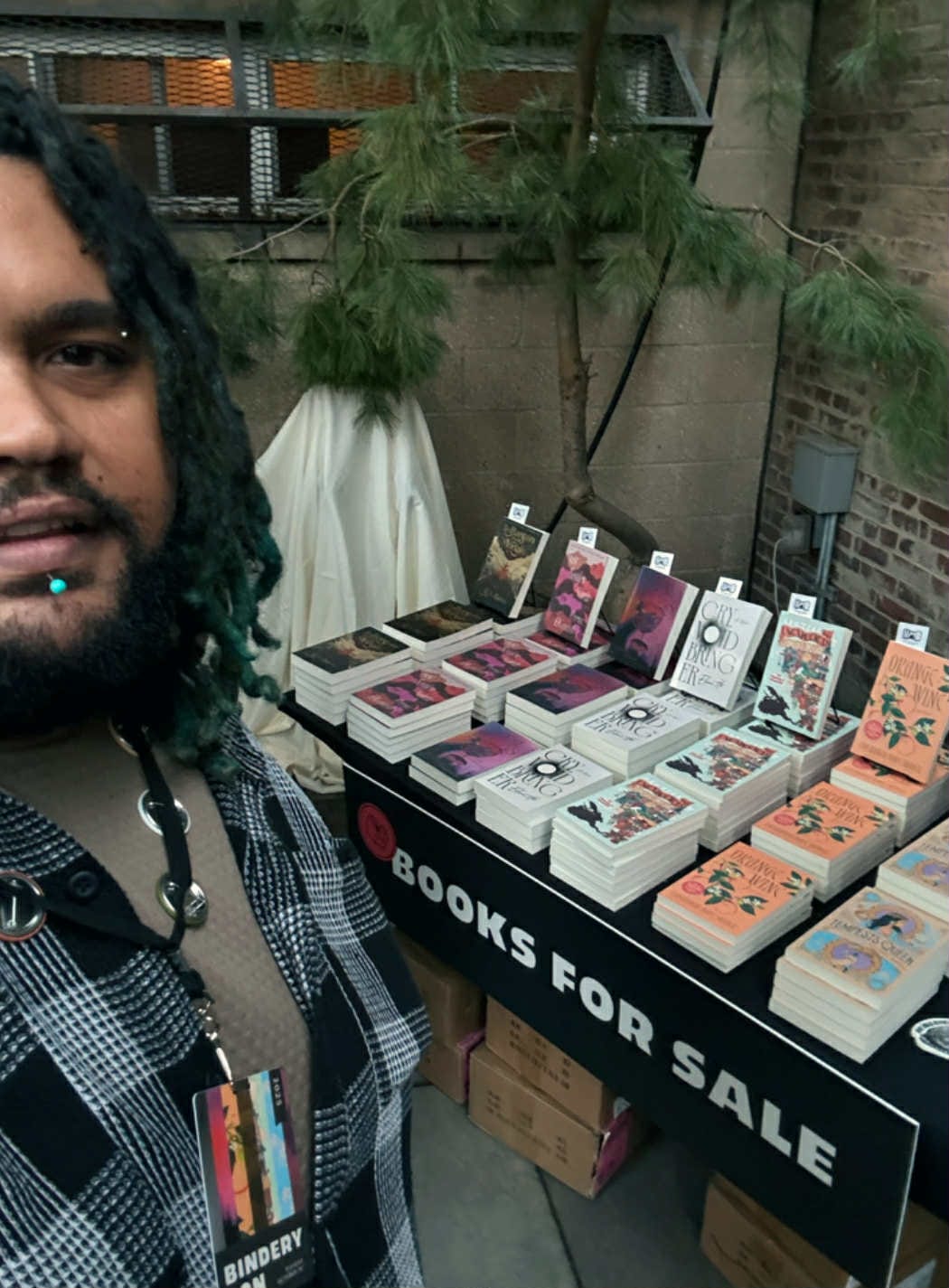
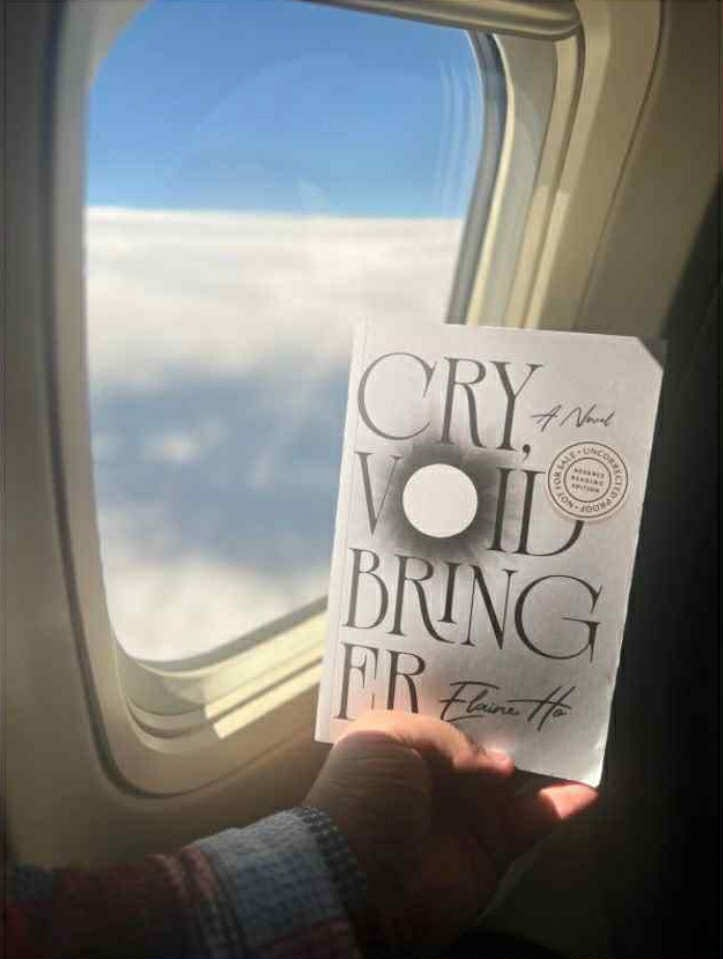
Left Unread Books, however, bases every business decision on how it will unite the community. The imprint’s strength lies in collaboration rather than its capital; every published title is selected with the collective need in mind. “Each story we publish tackles systems of oppression in some way,” LaBorn says. “Our first book, Cry, Voidbringer, explores colonialism and how it shapes marginalized identities. That’s not a conversation you see often in literature—but it’s one that matters.”
Through a network of paid subscribers and dedicated supporters, Left Unread is able to compete with larger houses, pushing out bold, socially conscious stories at a professional level.
That model is rooted in the structure of Bindery Books itself. Each imprint under Bindery Books is led by a bookish influencer with an established community of readers who actively uplift underrepresented authors. Left Unread is focused specifically on elevating Black and brown authors whose work speaks to the realities of the world and the need for forward movement.
“We operate in community, and we’re showing that indie presses can disrupt the industry while staying true to their mission,” LaBorn says.
Part of LaBorn’s advocacy involves reexamining what publishing considers “quality” books. He encourages readers to question who sets the standards—and whom those standards exclude.
That challenge to convention extends to the authors he publishes. At Left Unread, he says, creative control stays firmly in the writers’ hands. “I give feedback and brainstorm ideas, but the authors have the final say,” LaBorn says. “If they choose a direction I don’t agree with, fine by me. It’s their story. We’re here to champion, not control.”
Mission Before Metrics
As Left Unread grows, LaBorn balances the weight of the business with the soul of a movement. How does he manage it? “No sleep,” he jokes. Then he clarifies, “I’m surrounded by people who are just as passionate as I am. I might be the one people see, but I’m not doing this alone.”
LaBorn’s long-term vision for Left Unread Books is as bold as it is transformative: to prove that Black and brown stories are not only just as marketable but as essential as anything else. He wants to be “disruptive,” he says—so much so “that nobody can continue to run a publishing business rooted in bigotry without being embarrassed.” To do that, he wants to put more Black and brown people in charge of making decisions in the industry.
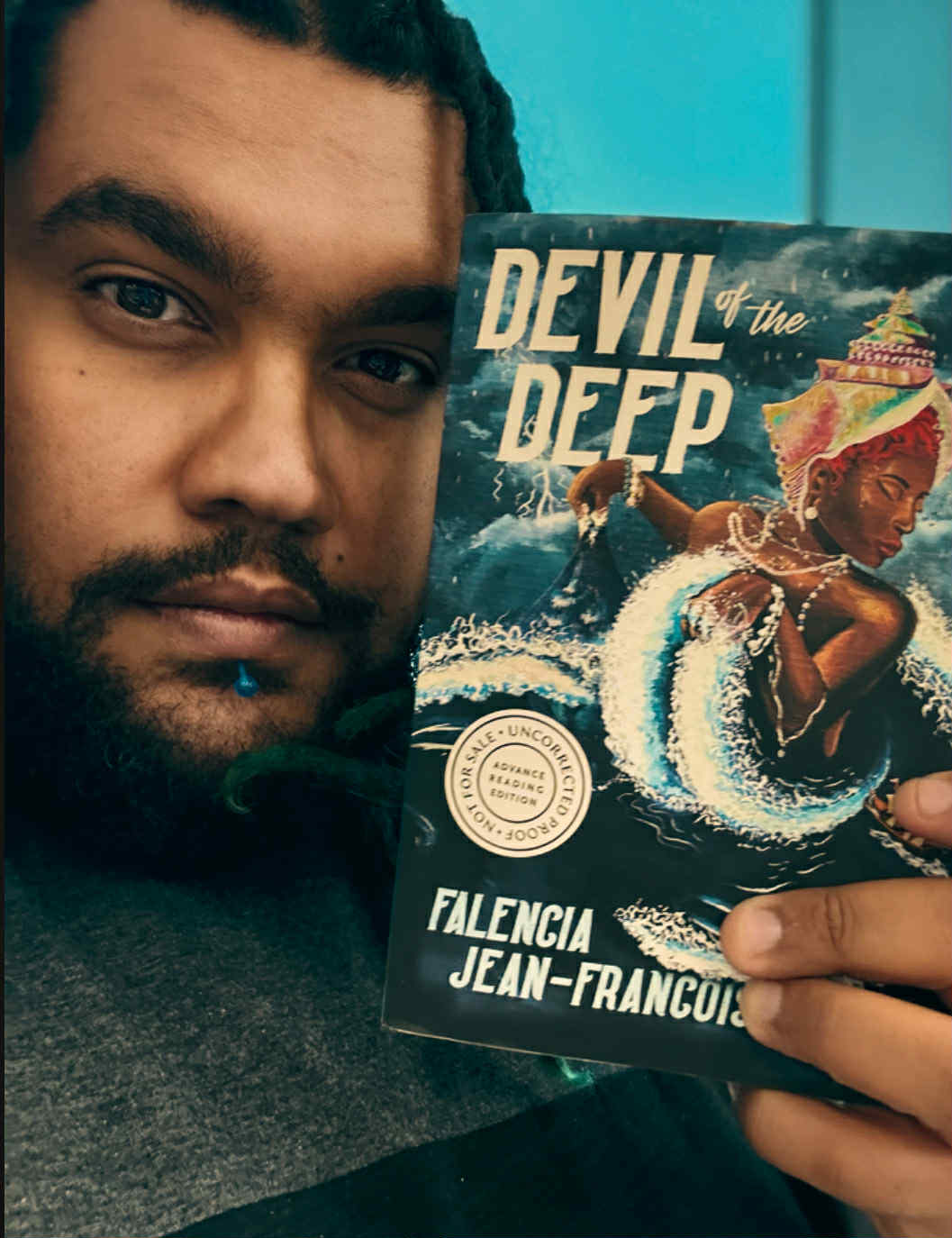
That belief is reflected in the imprint’s upcoming titles, each shaped by authors who use genre to explore deeper social themes. Devil of the Deep is a Haitian Fantasy about a notorious pirate and an ambitious navy captain who must work together to protect a young mermaid carrying an ancient artifact. The author frames the story as a response to the impact of Christian nationalism on marginalized cultures. From Our Blood, a dark academia Horror novel, follows a Black woman newly admitted to a prestigious school where she hopes to build a future as an artist. As former Black students begin turning up dead, she must uncover the institution’s hidden history before becoming the next target. The author uses the narrative to examine how Western institutions have historically been shaped by the experiences—and losses—of Black people.
“I want to prove that our stories aren’t just worthy—they’re necessary,” LaBorn says. “Writers are important, but as long as old, straight, white men are deciding who gets through, real change will be limited.”
Inspired by the Power of Community
When the conversation turns to inspiration, LaBorn doesn’t hesitate in sharing the source of his own. “Black women who write Romance, hands down,” he says. “What they’ve done in the last decade has completely reshaped the genre. Their sense of community and collaboration is what I want to see across the entire industry.”
That spirit of connection also fuels his advice for emerging authors. He urges them to find the people who are already doing the work. Don’t treat the community like a resource, he says, but like a relationship that should be nurtured, honored, and respected. “Engage, learn, show up. And watch them make space for you,” he says.
For any readers out there who want to help the mission of bridging the gap for marginalized authors, LaBorn’s advice is simple: “Pre-order the books. Talk about them. Even if you didn’t love it—talk about it. That’s how you build momentum for marginalized voices.”
He also offers guidance for the authors doing the work from the inside. “I encourage authors to write in community,” he says. “Especially marginalized authors. The major players in this industry are primarily interested in two things: making money and ensuring their continued ability to capitalize on your art. Marginalized authors threaten both of those goals because their art historically pushes society away from the systems that empower old white men.”
LaBorn doesn’t shy away from the realities of the industry, but he’s clear about where true strength comes from. “Beating down gates is not easy work,” he says. “But in community, it is absolutely possible. Don’t be afraid to use your voice to say incredibly bold things. And never be afraid to walk into any room where your community has decided you belong.”
Moments of Pride and What Comes Next
LaBorn lights up when talking about the community that’s formed around Left Unread. One of his proudest moments came just days before their first launch, when his TikTok post encouraging readers to preorder resulted in doubled numbers in only two days. “It was incredible seeing the community show up,” he says. “People are passionate about change, and they’re proving it with action.”
Looking ahead, his focus is on growth, not just for his imprint but for the movement it represents as well. Yet when asked what success looks like, his answer didn’t involve charts or sales figures. “It’s when I see readers engaging with our authors the same way they do with traditionally validated names,” he says. “I want to see fandoms built around indie authors—because they deserve that same love.”
LaBorn’s work isn’t about visibility for himself but about widening the lens for others. He encourages other authors and readers to join the movement, supporting authors at Left Unread by subscribing at Bindery Books and giving other marginalized indie authors a platform as often as they can. “Everything is community,” he says. “This work doesn’t happen in isolation.” By championing underrepresented authors and stories, he reminds the industry that influence isn’t always gained by speaking the loudest—it’s caused by creating spaces for others to be heard.


