


So much of the advice in indie publishing assumes there is a “normal” way to be productive. Time blocking. Rapid releases. Multiple projects at once. Long preorders scheduled months in advance. These systems work beautifully for some writers. For others—especially authors who are neurodivergent—they can feel like a maze built for someone else’s mind, creating friction, burnout, or a quiet sense of failure.
But what if the problem isn’t the writer?
Countless indie authors have embraced their neurodivergence and built careers that honor how their brains actually function, forgoing the systems and strategies others in the indie publishing community celebrate for strategies that reflect how they work best. Some received diagnoses early in life. Others came to that understanding much later, reshaping their writing routines and business systems as they learned what they needed.
Indie Author Magazine spoke with three authors who identify as neurodivergent to ask about how their diagnoses have affected their businesses, and how they’ve adapted systems and strategies to reflect their needs. From a poet who began her writing journey telling others’ stories to an award-winning author who’s learned how to use her skills at organization and pattern recognition to help her business, they encompass a range of experiences in the indie author sphere—and though there’s no single formula for a successful author career, they’ve each found one that makes navigating their writing journey a little easier.
Note: Responses have been edited for length and clarity.
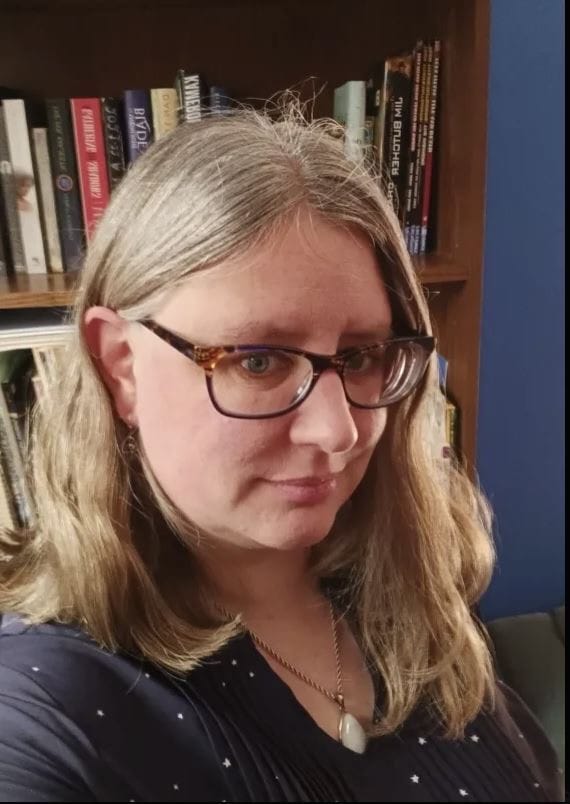
Denise Beucler
Denise Beucler writes under the name D.M. Beucler. She writes Regency and Fantasy genres. She published her first book, Memory Magic, with a small press in Edinburgh called Lunar Press Publishing. She has been diagnosed with ADHD.
IAM: What does a typical writing day look like for you?
Denise Beucler: A typical writing day for me is getting out of my home to our local library or a coffee shop. I find I'm a lot more productive if I have to justify that I bought a coffee to sit there and work. But my days changed so rapidly with my kids' needs, what their schedules are, and what activities they are having. I don't know if there's a typical day for me.
How have you adapted your writing routine or productivity systems to better fit the way your brain works?
Beucler: It's not something that came on suddenly. I've always been this way. I approach things in different ways. I have to work in the moment. I write my scenes out of order. If there's a scene that I'm really interested in, one I haven't written before, I'll just wait and see. Sometimes your mind has the idea and you follow that rather than fight with it. Then I'll come back and fix it, and adjust to make it cohesive in the editing process afterwards. Sometimes, I outline to get my story straight.
Are there common pieces of publishing advice that didn't work for you?
Beucler: So a lot of things don't work for me, as in “write every day.” One thing I do instead is trying to make sure that the time that I do write is more productive. I've been a fast writer, so I can write twenty two hundred to three thousand words in one day. Then I might write nothing for another week or two, depending on what our plans are.
What have been your biggest challenges as a neurodivergent indie author and how have you met them?
Beucler: Some things that you deal with differently when you have ADHD are rejection, sensitivity, and dysphoria, where you are very sensitive to rejection. I have a hard time marketing effectively because the little voice in my head says nobody really wants to see your writing. It has been a big struggle on my writing journey.
Besides marketing, productivity has been an issue. Tasks change quickly, but it's about getting into that zone. Writing is one of those things where you can't exactly switch in and out of it. You need a solid, uninterrupted block of time. That's been hard to find as a parent. I know people who can write on their phones during soccer practice. I have a hard time with that because there's too much going on.
How do you protect your mental health while managing the many moving parts of an author business?
Beucler: I have an amazing support system. I have a great husband and family. I never look at reviews and try not to go looking for negativity. I make sure that I'm limiting what social media I'm on. And especially on those days when everything seems to go wrong, I've learned to turn off the computer and go do something else. To give it time.
What advice would you offer other neurodivergent writers who are trying to build a sustainable career?
Beucler: I think it's really important to know that there's not one true way to write a book or to write short stories or poetry or whatever. Everybody's authoring process is different. I found it helpful to study other authors' processes.
Another thing that I found really helpful is a software called StimuWrite. When the pandemic hit, I stopped being able to write in coffee shops and I was at home. I needed something that gave me some stimulation, but not too much. For me, that's the keyboard noises when I write. StimuWrite is a little app that is pay what you can. It gives positive reinforcement. It lets you dial in sounds and things like that. It has helped my productivity.
 Wendy Van Camp
What has embracing your diagnosis allowed you to understand about yourself as a writer or business owner?
Beucler: I was diagnosed when I was in my teens. I am one of the rare ’90s women that got diagnosed early. I didn't end up on medication. I'm not sure if I'd make that choice today. My doctors told me I just needed to be more organized and that I could manage. That's not accurate. I definitely needed more support. However, coming up with systems that worked for me helped. I have to keep things visual. If I'm working on writing, I have to work with it on paper. Otherwise, I don't see things.
I have no experience of what it would be like to be neurotypical. My brain always worked in a kind of sideways way. I was very lucky. I knew I was different early on. It has helped me not feel like everything's falling apart all the time. Finding my own pace has been very helpful. It is okay. You are you.
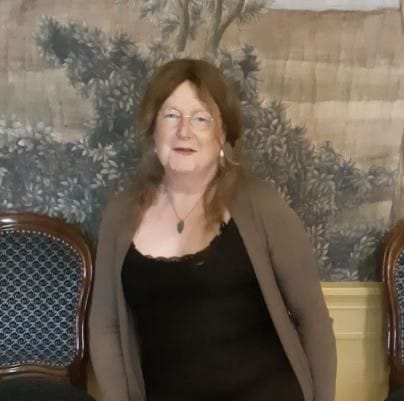
Karla Wagner
Karla Wagner is an award-winning poet, global public speaker, independent journalist, interviewer, columnist, and trusted advisor. With her love of the stage, singing, poetry and storytelling, she also mentors a new generation of professionals. Born in New York City, Karla is currently a Dutch citizen and a legal resident of Ukraine. Although her background is in the humanities, she found her career in IT and put two children through college with her skills.
IAM: What do you write?
Karla Wagner: I mainly write poetry and narrative storytelling in a poetic format. I also do literary translations—some of the old oral stories that are passed on from person to person into a written format. I preserve the story, the verbal quality, the rhythm. So it doesn't sound like the typical prose that people are used to reading.
How did you find your start in poetry and indie publishing?
Wagner: I first went to Ukraine at the beginning of the full-scale invasion and was promptly wounded in a double-tap attack whilst doing volunteer work as an IT professional. I would go to different hot spots, different cities, and meet poets who were serving in the military. I wrote their stories. I really love doing interviews. The poetry enabled me to take a deep dive into the culture and the language itself.
I found myself invited to a poetry reading in the basement of a building in Kyiv. I found my tribe with these people who are as quirky, different, and not perfect as I am. I discovered a poetry competition there, and I won first place. It was the start of my writing journey. I now publish a regular column in Rez Magazine and publish poetry in various journals.
Are you comfortable sharing about your neurodivergence? When did you come to understand that about yourself?
Wagner: I'm sixty-two. Neurodivergence as an appellation did not exist when I was a kid in the New York City public school system. Fortunately, I was sent to a school for gifted children, many of whom were neurodiverse. For example, I would routinely forget to go to French class or lose my printed schedule. I would forget where to be or what to do. It's complete disorganization, but there was no word for that then. It just was.
I developed coping mechanisms over the years to be organized and successful in a consulting career. It meant writing everything down on little three-by-five index cards so I would not forget.
“I've only been able to meet my challenges by making a plan and understanding that stopping writing did not mean I no longer had any poems in me. It wasn't because I was a failure as a writer.”
—Karla Wagner
Could you explain what a typical writing day looks like for you?
Wagner: I do not sit well at a computer, having been raised without it. My mind goes blank. I can sit on a train with a blank journal and just go gangbusters. Or I can sit in a cafe in a strange city where I've just arrived by train. I take a walk, and everything's different. I hang out in cafes and people-watch. I love coffeehouses. They are my salvation in both Second Life and in real life. So that is my typical writing day.
What is Second Life?
Wagner: Second Life is a virtual environment in which people create avatars or representations of themselves, like cartoon characters. People interact from all over the world, in all time zones. You can also build environments. Some are amazingly beautiful, some are surreal, and some houses look as boring as something you would see in the suburbs. You find your tribe, just like in real life. I’m part of a coffee and co-working community where I was accepted. I run a co-working session once a week in my little coffeehouse and host literary events there.
Are there any common pieces of publishing advice that didn't work for you? What do you do instead?
Wagner: Most of the online advice did not work for me. I spoke with individuals I deeply respected and asked for their advice. Their methods did not work for me. My system may not work for you either. Some people can't write on trains, or can't write in a loud place. I can go into a sports bar and come out with a poem.
As far as organization, the mechanisms that worked for me in consulting and stakeholder management or working on my MBA are the same tools I use for writing. For example, I use a very strict calendar and task system, which reminds me of what I need to be doing when but also assures me I have an unbroken block of time to do with what I will. And then I just prioritize what I want to do. Instead of juggling five or six things and being good at none of them, I try to find one thing to succeed at on that day.
What have been your biggest challenges as a neurodivergent poet? And how have you met them?
Wagner: I've only been able to meet my challenges by making a plan and understanding that stopping writing did not mean I no longer had any poems in me. It wasn't because I was a failure as a writer.
What hit me hardest was the loss of community. I have tried a few real-life writing communities and then did not fit in. Leaving was almost like the death of a close friend because I put a lot of myself into my community.
I would shut down for years at a time. I thought I was not good enough. Once I understood the mechanism, I was happy to settle for a few weeks or a month of downtime to do self-care, then return to my craft.
Do you have any advice for other neurodivergent poets?
Top of the list is to be kind because that is what people remember. If you want to find your big break, or to be introduced to someone from whom all will flow, it’ll be because you’re kind. You don’t have to be social or the life of the party to do this. You can be like a lion on the Serengeti and prowl around the edges of the crowd. When you see one person who doesn’t want to be in that crowd—maybe they are reading a book or talking on their phone—that’s the person you want to talk with. Make friends, find your community, and be kind.
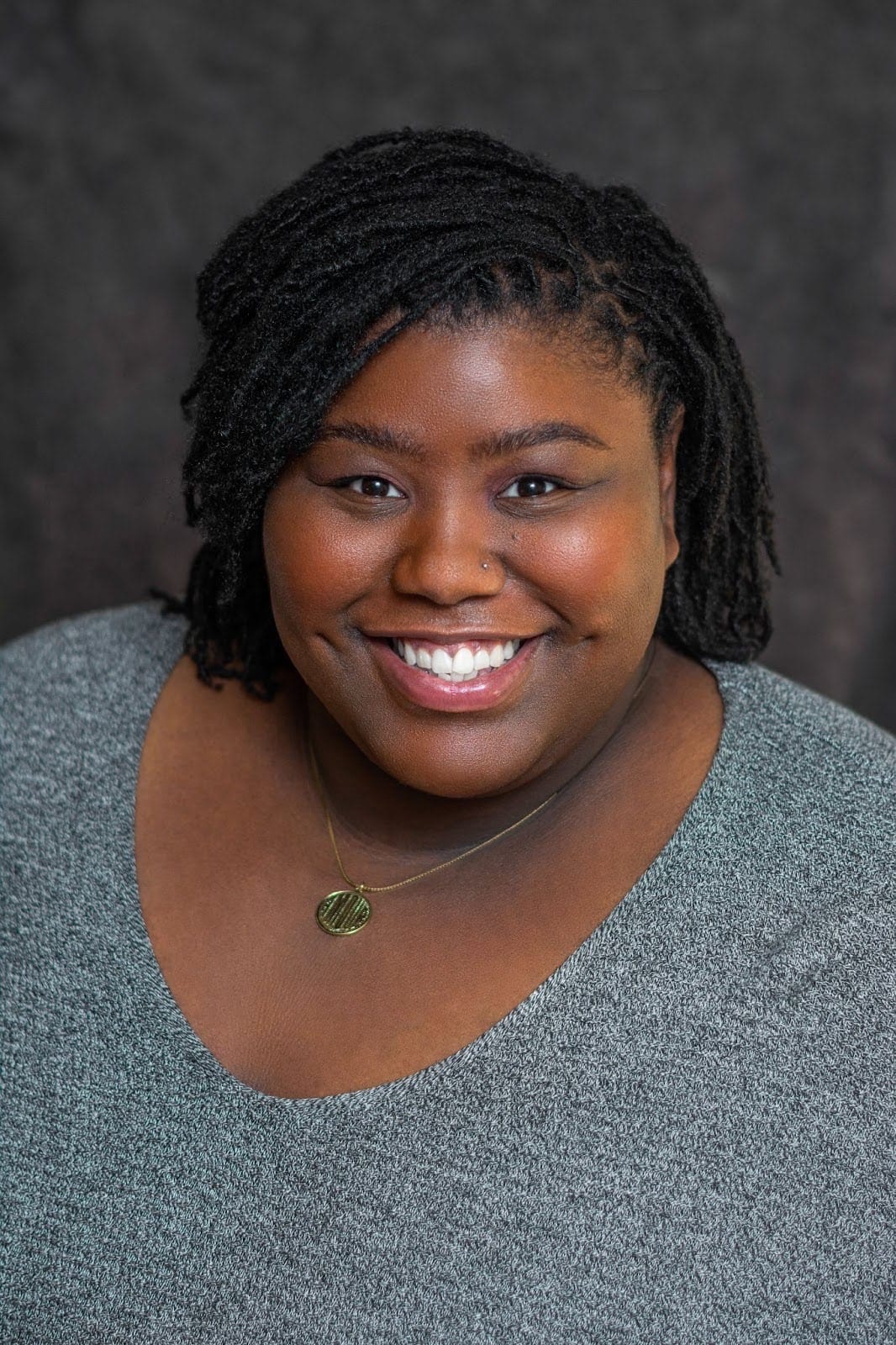
E.A. Noble
E.A. Noble is an award-winning author and poet and an acquisition editor for FIYAH Lit Mag and Rawhead Journal. She also serves as marketing chair for WisCon, a feminist, inclusive Science Fiction and Fantasy convention. Her work centers on womanhood, resistance, and the reclamation of self.
IAM: What drew you to indie publishing?
E.A. Noble: I started taking my writing seriously in 2023. Before then, I was on Wattpad. People loved my story, and I gained an accredited following on Wattpad. Then one day I received an urgent message, and I'm like, “Okay, what's going on?” Apparently, someone stole my work and was trying to put it on another site to sell it for a profit.
My followers had my back, and as far as I know, it was taken down. But that situation really got me thinking about my life and my career in writing. Before this happened, I was having fun. I thought to myself that nobody's got hate for my writing, and I did not feel I was worthy to be published. Afterwards, I realized people were actually buying my work. So maybe people want to read my story. I took my writing seriously at that point, and this started my writing career.
Are you comfortable sharing about your neurodivergence? When did you come to understand that about yourself?
Noble: Like most women tend to be, especially Black women, all my life I was told that I was bipolar. I had to go on mood stabilizers, which increased my negative thinking. The drug also increased suicidal thoughts. It increased my depression.
I didn’t think it was supposed to make me feel like this. And the doctors responded with, “Oh, we’ve got to find your right dose,” or “We've got to find the right medication.” It felt like I was living life with really dark glasses on. I kept telling them, “This isn't working. Something is wrong. I don't think I have bipolar.” They say, “Yes, you do. You have the symptoms.” So I had to listen to my body, and I stopped taking the pill.
One day, I was scrolling—I think this was about seven years ago. I came across a lady who was saying she had been diagnosed incorrectly with bipolar. And I was like, “Oh, let me see,” because I felt that way too. I didn’t think I had autism. Because when we think about autism, it is that autism has a certain look. But because of that woman, I got tested, because why not? To my surprise, I had both autism and ADHD. That's how I came to my diagnosis.
The doctors switched the mood stabilizers to ADHD medication. For the first time, it felt like the glasses that I'd been walking through life with were removed. I was seeing the world in vivid colors that I'd never seen before. Then I started researching more about autism and ADHD and seeing that there are so many similar stories out there. And that's where I am today.
Before you came to this understanding, were there aspects of writing that felt confusing or frustrating?
Noble: Everything was confusing and frustrating. Then you have to add another layer with being a professional. When I am in a professional setting, I'm already being judged based on what I look like. Whatever biases people have about either being a plus-size woman or a Black woman, people judge you on what they see. So there are already stereotypes. It looks like I am staring at the screen, but then people are surprised that I get a project done in a day. My mind gets hyperactive. I'm focused like a laser.
Then you add ADHD to it. I have to make sure that I am kind to myself even when no one else is. Having the diagnosis helps me to understand who I am. I can better describe to other people what I need.
What does a typical writing day look like for you?
Noble: I either write in the dark or at night. So I have a little starry night light that I turn on for the atmosphere. I also listen to instrumental background music. I love to use apps like Google Docs, Word, and Ulysses that automatically sync to the cloud. I make sure I have my beverages beside me, usually juice and some type of water, my snacks, and the popcorn.
When I'm having an executive dysfunction day where it feels like I want to do the task, but I cannot do the task, I tell myself, “Five minutes. That's all you need.” It sounds extreme. But that's what it looks like.
“For the first time, it felt like the glasses that I'd been walking through life with were removed. I was seeing the world in vivid colors that I'd never seen before.”
—E.A. Noble
What parts of the writing or business process play to your strengths?
Noble: Organization. I'm really great at it, not because I love organizing but because I need a certain type of order that works for my brain. I am so detailed—I can't think of all the ways—it's very step-by-step, and it's very easy.
Another thing I learned is that a lot of autistic people are really great at pattern recognition. There is a connecting of the dots. I can look at something and automatically see that it's not right, or something is missing, or something‘s weak in the middle that needs to be strong. This pattern recognition is good with the way I tell stories. I never need a developmental editor because I understand all my structural things are critical points. I can see not only the bigger picture but how plots and characters are all intertwined.
What advice would you offer to other neurodivergent writers?
Find community. It does not matter if you’re an artist, a writer, or a singer. Writing is not an island. Maybe some people can go into their office and work by themselves, be in their heads, and isolate themselves. That’s totally fine if that is their process. I’ve learned in this industry, if you want to have a sustainable career, you need to find your community because those isolated authors typically have a PA, an agent, and other people are probably doing the other work for them. If you don’t, then your community helps you do what you need to do, and they will do the rest for you. A lot of authors are juggling both.
Also, show up for yourself, because a lot of this industry is filled with rejection. There are ups and downs for all indie authors. So show up, because if you cannot for yourself, don’t expect other people to do it for you. Be consistent and present in your community.


